


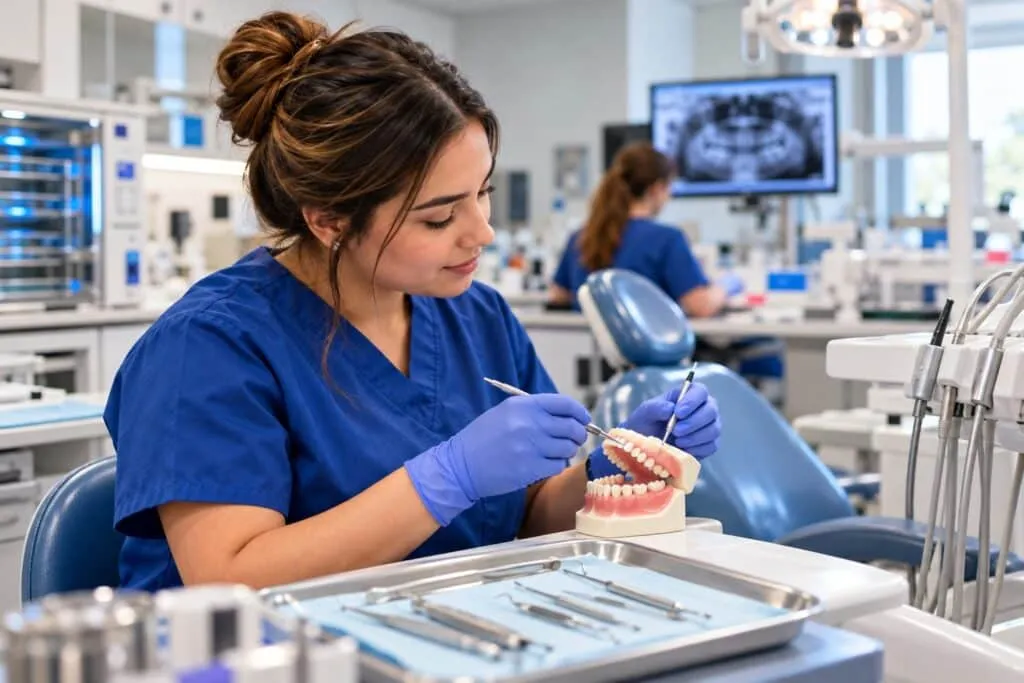
Changing professions rarely begins with a perfect plan. A retail employee may enjoy helping people but want a more structured career path. A parent returning to work may seek a role that blends technical learning with daily interaction. Dental assisting can attract both, yet enthusiasm alone cannot replace preparation. Career changers benefit from examining the work, identifying transferable abilities, and arranging training around financial and family responsibilities.
Translate Previous Experience Into Useful Strengths
People entering dental assisting do not necessarily begin with zero relevant skills. Restaurant staff already know how to stay organized during busy periods. Customer service employees may have experience listening to worried customers and responding politely. Office workers often understand schedules, records, and confidentiality expectations. These experiences are not substitutes for clinical instruction, but they can help new students recognize familiar workplace demands.
A useful first exercise is to describe past responsibilities without relying on job titles. For example, handling multiple customer requests demonstrates prioritization, while following a cleaning checklist shows attention to established procedures. Prospective students can then identify missing abilities, such as instrument recognition and clinical safety practices. That comparison provides a more realistic basis for choosing training than simply imagining a different uniform or workplace.
Learn What an Ordinary Dental Office Day Requires
Dental assistants may help prepare rooms, organize instruments, support procedures within their authorized duties, and communicate with colleagues. The pace can change quickly when appointments run late or treatment requires additional preparation. Some tasks demand careful repetition; others require calm interaction with patients. Career changers should learn about both the technical and interpersonal elements before deciding that the position suits their interests.
When reviewing a farmington hills dental assisting school near me in farmington hills mi, ask how students are introduced to those ordinary routines. Training should explain why tasks happen in a particular order and show how assistants contribute to efficient care. A school visit or detailed conversation about classroom exercises can reveal whether the program prepares beginners for realistic expectations rather than an idealized picture of healthcare employment.
Plan for the Adjustment to Being a Student
Returning to structured learning can take effort, particularly after years away from textbooks and assessments. Clinical vocabulary may be unfamiliar, and hands-on procedures can feel awkward at first. Establishing short, regular study sessions can be more sustainable than cramming before an evaluation. Students who practice terminology and review notes consistently may find it easier to connect new concepts with classroom demonstrations.
Family and work schedules also deserve advance planning. Ask whether attendance requirements allow enough time for commuting, childcare, and independent review. If an externship is included, find out how placements are arranged and what hours may be expected. A realistic schedule should account for the entire learning commitment, not just the number of days advertised for classroom attendance.
Build Confidence Through Supervised Repetition
Technical confidence develops through practice and correction. Recognizing an instrument on a printed page is different from selecting it in a treatment setting. Likewise, knowing an infection prevention rule is different from applying it consistently while preparing a room. Programs that offer repeated, supervised exercises give learners opportunities to connect knowledge with action and identify errors before they become habits.
Career changers should welcome feedback rather than interpret it as evidence that they do not belong in the field. An instructor may correct hand positioning, organization, or communication during a simulated appointment. These small adjustments can improve consistency over time. Ask schools how skills are evaluated and what happens when a student needs additional practice before progressing to another task.
Prepare for the Job Search Without Expecting Guarantees
As training progresses, students can begin translating their earlier experience into a resume appropriate for healthcare settings. They might emphasize reliability, communication, scheduling, and the clinical skills they have actually learned. Interview preparation should include explaining why they chose the field and describing how they respond to correction, pressure, and detailed safety procedures.
Applicants should also check the requirements attached to individual vacancies. Some employers request particular credentials or experience, and certain duties may be regulated under Michigan rules. A program completion document does not automatically authorize every task. Clear conversations with the school and prospective employers help graduates distinguish entry-level opportunities from roles requiring further preparation.
Conclusion
A career change becomes more manageable when curiosity is paired with an actionable plan. Understanding daily responsibilities, arranging study time, practicing clinical routines, and preparing for realistic job requirements all matter. Dental Assistant & Lab Technician School of Michigan offers training that career changers can examine as part of that process. The goal is not simply to leave an old job quickly, but to develop the habits and relevant knowledge needed for a responsible transition into dental healthcare.