


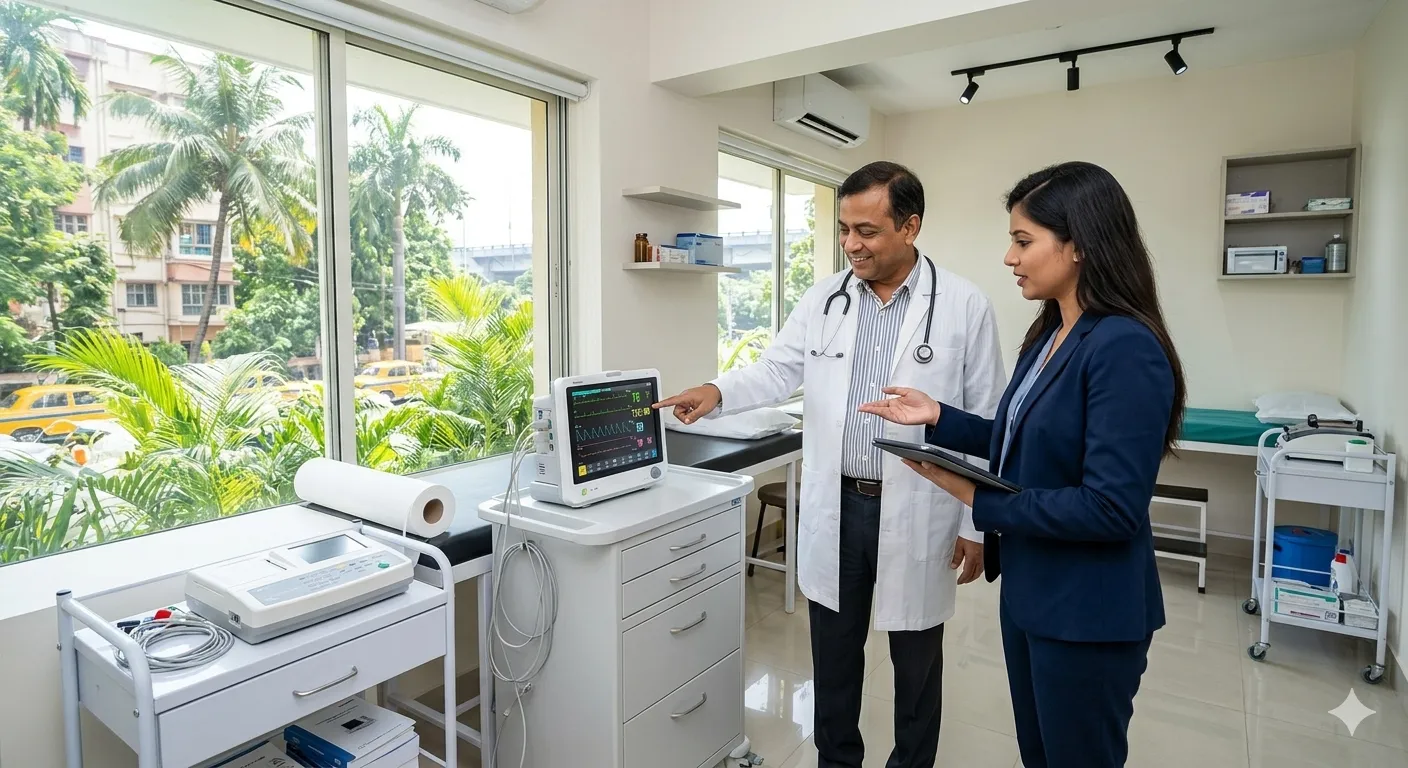
Opening a clinic involves hundreds of decisions, but few shape daily operations as strongly as the devices placed in the consultation room and the treatment area. Selecting the right medical equipment in West Bengal is not only about price comparison; it also involves suitability for your speciality, local service availability, and long-term reliability. This guide walks first-time clinic owners through a clear sequence of questions, so purchases are deliberate, balanced, and aligned with the patients you realistically expect to treat.
Start With Your Clinical Scope
Before browsing catalogues, write down the procedures your clinic will actually perform in the first year. A cardiology practice needs different tools from a maternity clinic or a general physician’s chamber. Listing patient volume, common diagnoses and referral patterns gives a realistic picture of demand. This exercise prevents the common mistake of buying impressive machines that remain idle while essential everyday instruments are missing, or must be borrowed from neighbouring facilities at inconvenient moments. Early clarity here saves both money and effort.
Separating Essentials From Upgrades
Every speciality has a short list of devices needed from the first day, and a longer list that can wait. Essentials usually include diagnostic instruments, emergency readiness items, and basic monitoring tools. Upgrades such as advanced imaging can follow once patient numbers justify them. Dividing the wish list into these two groups keeps opening costs manageable and leaves room in the budget for consumables, furniture, training, and the unexpected requirements that nearly every new practice encounters during its first months.
Budgeting Beyond the Price Tag
The purchase price is only the starting point of ownership. Add installation, accessories, replacement cables, consumables, staff training, and yearly servicing to estimate the real cost over five years. Two machines with similar prices can differ widely once these items are included. Asking suppliers for a clear breakdown helps you compare offers fairly, and it protects the clinic from surprise expenses that tend to appear soon after the equipment is installed and the warranty conversation begins. Each later decision then becomes much easier.
Why Brand Reputation Matters
Doctors rely on instruments daily, so familiarity and trust in a manufacturer carry real weight. Established brands generally offer wider spare availability, documented procedures, and trained engineers in major cities. Clinics that prefer a recognised Indian manufacturer can explore options to buy bpl medical equipments across cardiology, critical care, gynaecology and home health categories, which makes it easier to standardise accessories and consumables across several rooms and simplifies later purchases. Standardising on one brand also strengthens your bargaining position in later negotiations.
Checking Authorisation and Warranty
A device purchased from an unauthorised seller may arrive without valid warranty support, or with accessories that do not match specifications. Always request proof that the dealer is authorised by the manufacturer, and confirm what the warranty covers, including labour and parts. Retain invoices and installation reports carefully. These documents matter whenever a claim is made, and they also help when you later decide to upgrade, relocate, or resell a unit within the same city. Ask for written confirmation of every promise.
Insist on a Demonstration
Specifications on paper rarely reveal how a machine feels in daily use. A live demonstration lets doctors and nurses evaluate screen readability, menu logic, alarm tones, and speed of operation. Many reputable dealers will bring the equipment to your premises, which also allows you to check power supply, space, and workflow. Treat this visit as an interview for the device, and invite the staff members who will actually handle it every single day. No serious buyer should ever skip this important stage.
Planning for Consumables and Accessories
Devices fail to deliver value when basic supplies run out. ECG paper rolls, electrodes, patient cables and oxygen sensor probes wear out gradually and must be replaced with compatible parts. Check that these items are easy to order locally and priced reasonably before you commit to a particular model. Keeping a small reserve stock avoids interruptions and helps your team continue working smoothly during busy outpatient hours, when delays are least affordable. Small purchases like these quietly decide daily clinical efficiency.
Conclusion
Equipping a clinic well comes down to preparation: understand your scope, prioritise essentials, calculate lifetime costs, verify authorisation, and test before buying. Doing so builds a practice that runs smoothly from the first appointment and avoids regret later. If you want guidance from a team that has served healthcare professionals in the region since 1983, electrocareservices.com is a dependable place to begin your search and plan the next stage with confidence. Careful buying today prevents costly corrections and frustrating delays tomorrow.